Considering a real estate option or lease-option in Newport Beach, Costa Mesa, or Laguna Beach? Learn how California option agreements work, including option payments, disclosures, inspections, financing, and key risks for buyers and sellers.


Considering a real estate option or lease-option in Newport Beach, Costa Mesa, or Laguna Beach? Learn how California option agreements work, including option payments, disclosures, inspections, financing, and key risks for buyers and sellers.

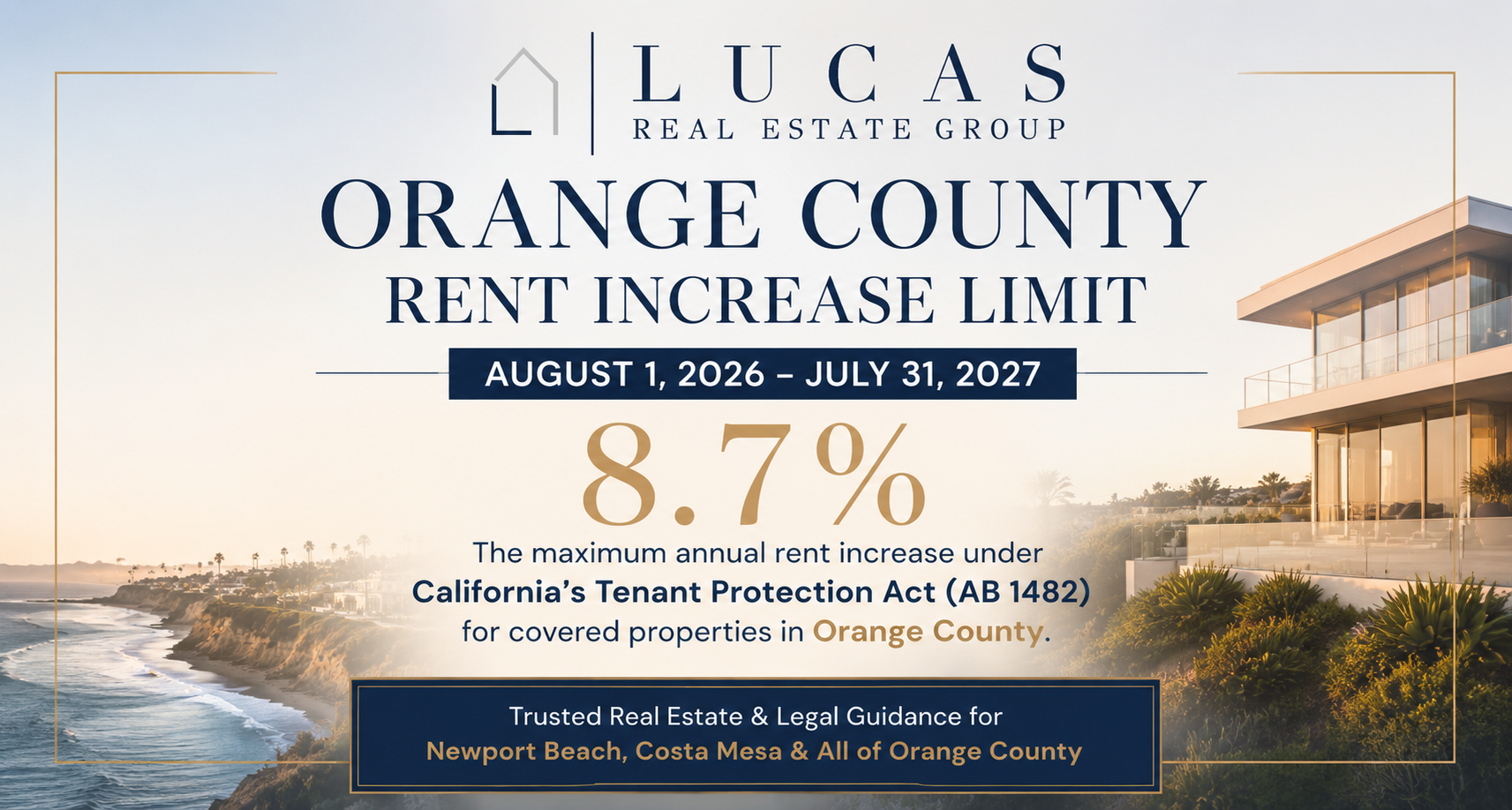
How much can landlords raise the rent in Orange County in 2026? The maximum rent increase under California’s Tenant Protection Act for covered rental properties in Orange County is 8.7% for increases effective August 1, 2026 through July 31, 2027. This applies to covered properties in Newport Beach, Costa Mesa, and throughout Orange County—but not every rental is subject to the statewide rent cap.

Choosing the right property management company is about far more than collecting rent. Whether you own a rental home in Newport Beach, Costa Mesa, Newport Coast, or Corona del Mar, the right property manager can help protect your investment, attract qualified tenants, reduce vacancy, navigate California landlord-tenant laws, and maximize your property’s long-term value. In this comprehensive guide, learn the questions every California property owner should ask before hiring a property manager, how to evaluate management fees and services, and why legal, tax, and local market expertise can make all the difference.

Lucas Real Estate Group is proud to present this exceptional lease opportunity in Huntington Beach’s sought-after Seabridge Village. Backed by the unique insight of a real estate attorney and CPA-led team, we help clients navigate every aspect of leasing, buying, selling, and investing throughout Orange County’s coastal communities.

Newport Beach and Costa Mesa landlords are facing increasingly complex fair housing and emotional support animal regulations. Learn what California property owners should know about ESA accommodation requests, tenant rights, HOA concerns, liability exposure, and how experienced property management can help reduce legal risk and protect luxury rental properties.

Starting in 2026, California landlords must provide a working stove and refrigerator under AB 628. Learn how this impacts leases and habitability rules.

What happens when a tenant moves out before their lease ends? In California, tenants remain responsible for unpaid rent and re-rental costs—but landlords must make reasonable efforts to find a replacement rather than simply charging the tenant for the full lease term. Under California Civil Code § 1951.2, landlords have a legal duty to mitigate damages by advertising the property, setting a fair market rent, and considering qualified replacement tenants. If a landlord rejects a viable tenant without good reason, the outgoing tenant’s liability may be reduced. A proactive approach can minimize downtime and financial loss for both parties.

Ban on Predatory Real Estate Offers Extended
Governor Newsom has extended through July 1, 2025 the executive order prohibiting unsolicited, undervalued real estate offers to homeowners in firestorm-affected Los Angeles ZIP codes. This crucial protection targets predatory investor behavior aimed at vulnerable property owners still recovering from disaster.
While this new order applies to property sales, it’s important to note that rental price caps and eviction protections remain in effect under earlier executive actions.
📖 Read our full article to learn how these protections impact real estate professionals, landlords, and property owners throughout Southern California.

Thinking about forming an LLC to hold real estate in California? Discover why LLCs are a powerful tool for privacy, asset protection, estate planning, and tax flexibility—especially for high-value properties in Newport Beach, Costa Mesa, Corona del Mar, and other Orange County coastal communities. This comprehensive guide from Lucas Real Estate Group covers everything from liability and tax benefits to Prop 19 strategies and long-term maintenance considerations.

If you own a California LLC — even one with no income or used solely to hold real estate — you’re still required to file Form 568 and pay the $800 minimum annual franchise tax. This blog breaks down the two most critical filing requirements for LLC owners, especially those using an LLC for privacy, rental properties, or estate planning purposes. Don’t risk penalties or suspension — find out what’s due, when, and how to stay compliant.
Lucas Real Estate
2901 West Coast Highway Suite 200 | Newport Beach | California | 92663-4023
info@lucas-real-estate.com | 949.478.1623 office
Devin Lucas BRE No. 01912302 | Courtney Lucas BRE No. 02015514
Lucas Real Estate, a dynamic full-service residential real estate team led by Devin Lucas, REALTOR®, Real Estate Broker, and Real Estate Attorney, and Courtney Lucas, REALTOR® and CPA, offers unparalleled expertise in Newport Beach and surrounding areas.
Privacy Policy | Accessibility | Disclaimer | Newsletter | Social Media